

What the Core Carbon Principles Label Means for Soil Carbon Credits From Farms
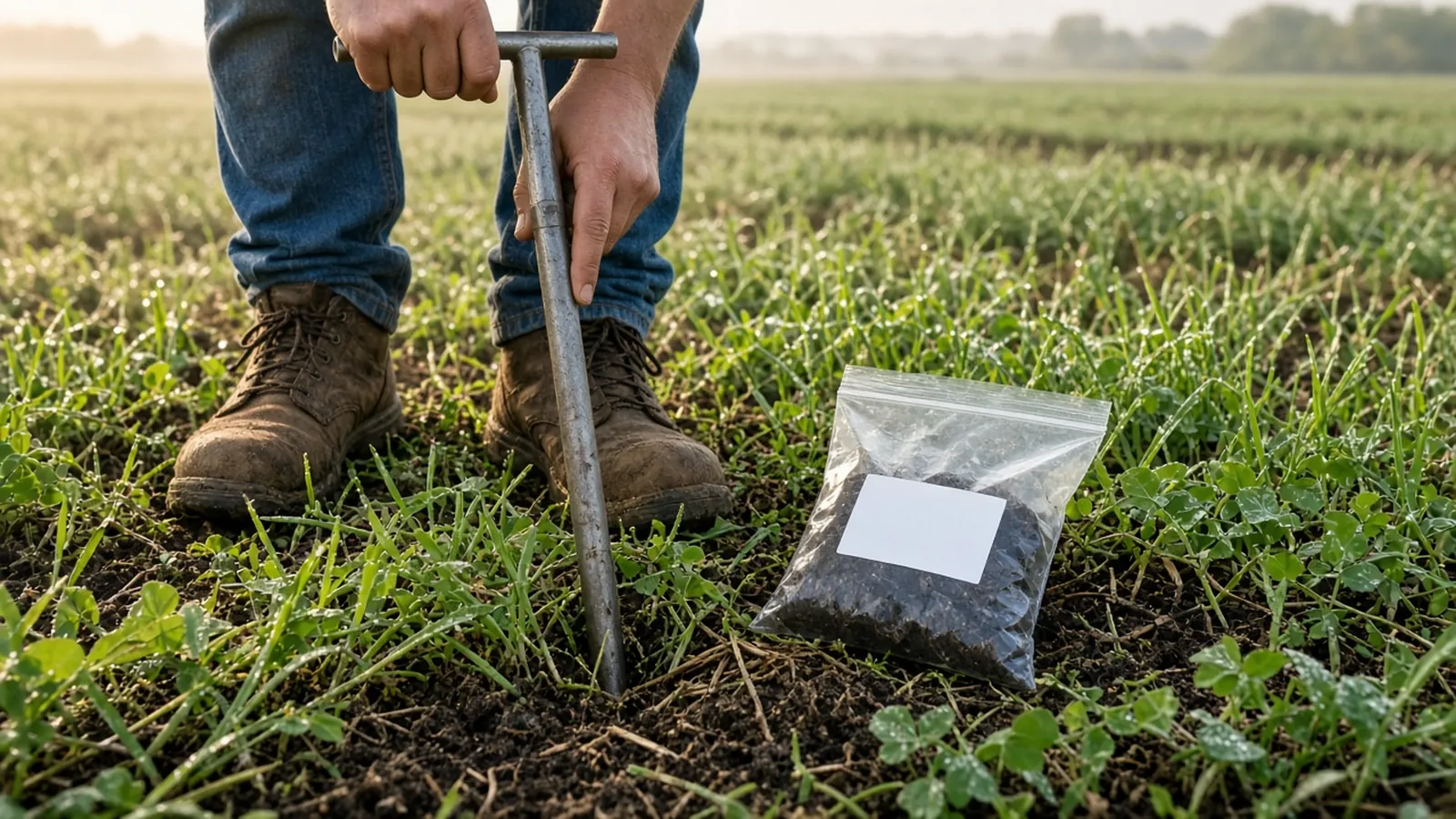
A soil carbon credit from a farm can now carry the Core Carbon Principles label, but only when its methodology meets specific conditions. In October 2025 the Integrity Council for the Voluntary Carbon Market, known as the ICVCM, approved two sustainable agriculture methodologies for the label: the Climate Action Reserve's U.S. Soil Enrichment Protocol version 1.1 and Verra's VM0042 Improved Agricultural Land Management version 2.2. For a farmer, the label conditions are the useful part, because they set what a buyer can expect about contract length, grazing practices and how soil carbon is measured. This article explains those conditions in plain terms and lists the questions to ask before you enroll acres with any carbon program, including ours.
What the Integrity Council Approved
The ICVCM is an independent body that sets a threshold quality label for voluntary carbon credits. Its announcement on October 30, 2025 described the first approval of agriculture methodologies in its sustainable agriculture category. That category covers practices that cut greenhouse gas emissions or add soil organic carbon, such as reduced tillage, residue management, crop rotation, improved grazing, optimized fertilizer use and better water management.
Both methodologies were approved with conditions rather than outright. Credits only qualify for the label when those conditions are met. The ICVCM also noted the scale of what sits behind the decision. About one million credits had been issued under the Climate Action Reserve protocol at the time. Verra's v2.2 was new, with no projects registered under it yet, though Verra's registry then held roughly 200 projects under earlier versions with a combined potential of an estimated 126 million tonnes of emission reductions and removals a year (Verra, October 30, 2025). Those are potential figures from October 2025, not issued credits.
A label is a quality screen. It is not a price, a payment or a promise that a particular farm will earn credits. Our own platform overview explains how we approach farmer participation, and the 2022 explainer on carbon credit markets gives the background on how credits are created.
What the Core Carbon Principles Label Conditions Mean on a Farm
Each methodology received a different condition, and each lands differently on a field. Read the condition that applies to the program you are considering.
Permanence: a 40-year commitment
For the Climate Action Reserve protocol, the ICVCM approved labeling where a Project Implementation Agreement with a minimum 40-year permanence commitment is in place. For a farmer, that means a very long horizon. Land can be leased, sold or inherited inside 40 years, so ask how the agreement follows the land and what the grower owes if practices change. Soil carbon can be lost as well as gained.
Measurement: soil carbon has to be sampled
For Verra's VM0042 v2.2, the label condition is about measurement. Soil organic carbon must be measured with one of the techniques the methodology allows, with the exception of digital soil mapping, which the ICVCM did not assess. Verra lists the allowed techniques on its VM0042 v2.2 page: dry combustion, infrared spectroscopy, laser-induced breakdown spectroscopy, inelastic neutron scattering, and the Walkley-Black wet oxidation or loss on ignition techniques. In farm terms, the credit depends on soil that is actually sampled and analyzed, not only on a model. The ICVCM decision document records the same condition.
Practices: what the label leaves out
The Climate Action Reserve approval also requires that the practices in a project are not rotational or intensive grazing. So a ranch that earns its soil carbon benefit through grazing management is outside that particular label condition. The Verra methodology, by contrast, lists grazing among the practices it covers. The practical lesson is to match your operation to the methodology before you assume a credit is available. A no-till row-crop farm and a grazing operation can land in different places, and the Engineering Earth protocol shows the row-crop practices we work with: tracks instead of tires, no plow and cover crops.
Questions to Ask Before You Enroll Acres
A label condition does not replace due diligence. Bring the questions below to any developer, aggregator or buyer, and expect straight answers.
Which methodology and registry apply to my acres?
Ask for the methodology name and version, the registry, and whether the credits are intended to carry the Core Carbon Principles label. Verra says VM0042 v2.1 and v2.2 are both active, and that projects may keep operating under an earlier version, so the version matters. Our USDA page describes the Hemp4Soil research program we work alongside, and the Heartland farmers page describes the grower network.
How will my soil be sampled and analyzed?
Ask how many samples are taken, how deep, how often, and by which laboratory method. Ask who pays for sampling and who owns the results. For a plain-language look at why soil structure and cover matter, see our guide to regenerative agriculture and soil health.
What does the contract require, and for how long?
Ask for the permanence term in writing, the practices that must continue, what happens if you miss a year, how payments are calculated and when they arrive, and what happens to the agreement if the land changes hands. If a program cannot answer, treat that as an answer.
If you want to talk through your acres, the contact page is the place to start, and our news hub tracks developments as they happen.